
 16661 Ventura Boulevard, Ste. 208, Encino, CA 91436
 818-646-0194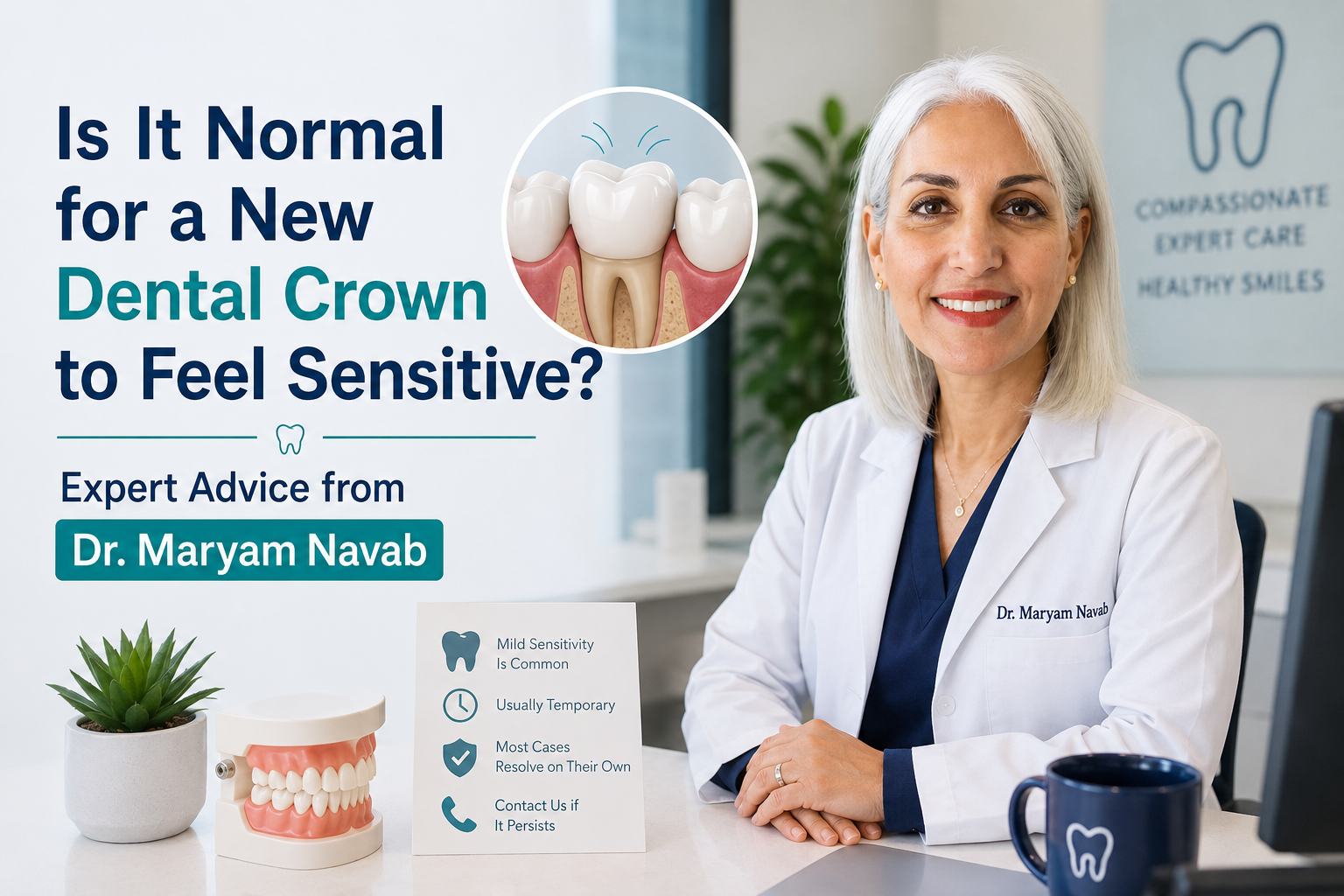
Sensitivity following placement of a new dental crown is a common patient concern. Causes include the crown materials, procedural effects, and individual tooth response. Recognizing these factors can reduce anxiety and set appropriate expectations for recovery. This article explains causes, expected duration, the role of bite adjustments, and care strategies for new crowns. It also includes clinical insights from Dr. Maryam Navab to assist patients in managing their recovery.
What Causes Sensitivity After Receiving a New Dental Crown?
Post-placement sensitivity may result from several factors. The most frequent causes are dentin exposure—often related to marginal fit—and the tooth’s response to restorative materials.
Further research examines specific factors, such as luting cements, that may influence post-cementation sensitivity.
Postoperative Crown Sensitivity: Reduction, Temporization, & Cement Risks
This investigation evaluated which luting cements are associated with greater post-cementation sensitivity. (Risk of Postoperative Sensitivity and Pulpal Complications in Respect of: Amount of Reduction, Temporization, Cement Type, 2021)
Common factors leading to dental crown sensitivity
Exposure of dentin—the tissue beneath enamel—is a common contributor to sensitivity. If the tooth structure beneath a crown is not adequately insulated, thermal changes can produce discomfort. Crown materials such as porcelain or metal conduct temperature differently and may elicit sensitivity to hot and cold stimuli.
How bite misalignment contributes to discomfort
Occlusal misalignment can cause discomfort after crown placement. A crown that is too high or not properly aligned increases occlusal load on the tooth, producing pain and sensitivity. Misalignment may also lead to jaw soreness and headaches, so timely correction is important.
How Long Does Dental Crown Sensitivity Typically Last?
The duration of sensitivity varies among patients. Some individuals experience brief discomfort, while others report sensitivity that persists longer.
Expected duration of temporary crown sensitivity
Typically, sensitivity subsides within a few days to several weeks. Most patients report notable improvement within two weeks as the tooth acclimates to the restoration. Factors such as crown material and overall oral health can influence this timeline.
When to consider sensitivity as a sign of complications
Patients should monitor symptoms closely. Persistent or worsening sensitivity beyond several weeks may signal an improper fit or other dental pathology. In such cases, arrange a clinical evaluation with your dentist.
What Is a Bite Adjustment and Why Is It Important After Crown Placement?
A bite adjustment is a clinical procedure performed to ensure that a new crown integrates correctly within the patient’s occlusion. This intervention is essential to restore comfort and proper function.
Clinical studies have assessed criteria and methods for achieving optimal occlusal fit and bite adjustment for crowns.
Dental Crown Bite Adjustment & Occlusal Fit
Evaluation criteria included proximal contact, marginal integrity, excess crown height, and both the time and magnitude of occlusal adjustment. The Wilcoxon signed‑rank test assessed proximal contact and marginal integrity; paired t‑tests evaluated excess crown height, occlusal adjustment time, and adjustment magnitude (p<0.05). (Clinical study on the adjustments required during try‑in of crowns fabricated using the bite impression technique and with conventional methods, 2013)
Purpose and procedure of bite adjustment
The primary objective of a bite adjustment is to correct occlusal discrepancies that cause discomfort. The dentist will evaluate the patient’s occlusion and, when necessary, adjust the crown—often by selective reshaping—to achieve proper contact with opposing teeth and relieve excessive pressure.
Signs that indicate the need for bite adjustment
Signs that a bite adjustment may be required include persistent pain when biting, jaw soreness, or uneven wear on the crown. Prompt attention to these symptoms can prevent further complications.
How Can Patients Care for Their New Dental Crown to Minimize Sensitivity?
Appropriate care is essential to minimize sensitivity and extend the service life of a new crown. Patients should follow specific measures to protect the restoration during the initial healing period.
Effective dental crown care tips for comfort and longevity
- Avoid Hard Foods: For the first few days after crown placement, it is advisable to avoid hard or sticky foods that may put undue pressure on the crown.
- Use a Soft-Bristled Toothbrush: Gentle brushing with a soft-bristled toothbrush can help prevent irritation around the crown.
- Rinse with Warm Salt Water: Rinsing with warm salt water can soothe any discomfort and promote healing.
Recommended oral hygiene practices post-crown placement
Maintaining good oral hygiene is crucial after receiving a dental crown. Patients should:
- Brush Twice Daily: Regular brushing helps keep the area around the crown clean and free from plaque.
- Floss Daily: Flossing is essential to remove food particles and plaque from between the teeth and around the crown.
- Schedule Regular Check-Ups: Regular dental visits allow the dentist to monitor the crown’s condition and address any concerns promptly.
For those seeking comprehensive dental care, Easy Family Dental in Encino, CA provides restorative services including dental crowns. The practice delivers personalized attention and professional care.
When Should You Contact Your Dentist About New Crown Pain?
Knowing when to seek professional care is important. While some sensitivity is expected, certain symptoms require prompt evaluation.
Identifying normal sensitivity versus problematic pain
Mild sensitivity to hot or cold is often normal. Severe, persistent pain or any swelling may indicate an underlying issue and should be reported to your dentist for assessment.
How Dr. Maryam Navab addresses patient concerns and emergencies
Dr. Maryam Navab advises patients to maintain open communication about postoperative symptoms. She recommends contacting the dental team for any unusual or persistent symptoms so that an appropriate evaluation and treatment plan can be arranged.
For further information on dental crowns and restorative options, Easy Family Dental provides a range of clinical services.
If you are experiencing discomfort or have concerns about your dental health, contact us for professional guidance and individualized care.
To learn more about Easy Family Dental and the services they provide, visit the practice website.
Frequently Asked Questions
What should I do if my dental crown feels loose?
If your dental crown feels loose, contact your dentist as soon as possible. A loose crown can permit decay or damage to the underlying tooth. The dentist will assess the situation and may re-cement or replace the crown if indicated. Avoid chewing on that side until you have been evaluated.
Can I whiten my teeth after getting a dental crown?
Whitening agents generally do not affect crowns, which are manufactured from materials such as porcelain or metal and do not respond to bleaching. If you plan to whiten natural teeth, complete whitening prior to crown placement to achieve a consistent shade. For staining of an existing crown, consult your dentist for professional options rather than attempting to whiten the restoration yourself.
How can I tell if my dental crown is damaged?
Signs of crown damage include visible cracks, chips, or discoloration. Increased sensitivity or pain when biting may also indicate a problem. If you notice any of these signs, schedule an appointment so the dentist can determine whether repair or replacement is necessary.
Are there any foods I should avoid after getting a dental crown?
After crown placement, avoid hard, sticky, or chewy foods for several days to reduce the risk of damage. Choose softer foods while the area settles and gradually reintroduce your normal diet as comfort allows.
What is the difference between a temporary and a permanent dental crown?
A temporary crown, commonly made from acrylic or metal, protects the prepared tooth while the permanent crown is fabricated. Temporaries are intended for short-term use. Permanent crowns are custom-made from stronger materials such as porcelain or ceramic and are designed for long-term function and improved aesthetics.
How often should I have my dental crown checked?
Have your dental crown evaluated at routine dental check-ups, typically every six months. During these visits, the dentist will assess the crown and surrounding teeth. If you experience discomfort or notice any changes between appointments, contact your dental office for an interim evaluation.
Conclusion
Awareness of the causes and management of post-crown sensitivity supports a smoother recovery. Appropriate bite adjustments and diligent care reduce discomfort and help extend the restoration’s longevity. If sensitivity persists, consult a dental professional for a personalized assessment. Review our resources for further guidance on maintaining oral health and prolonging crown performance.